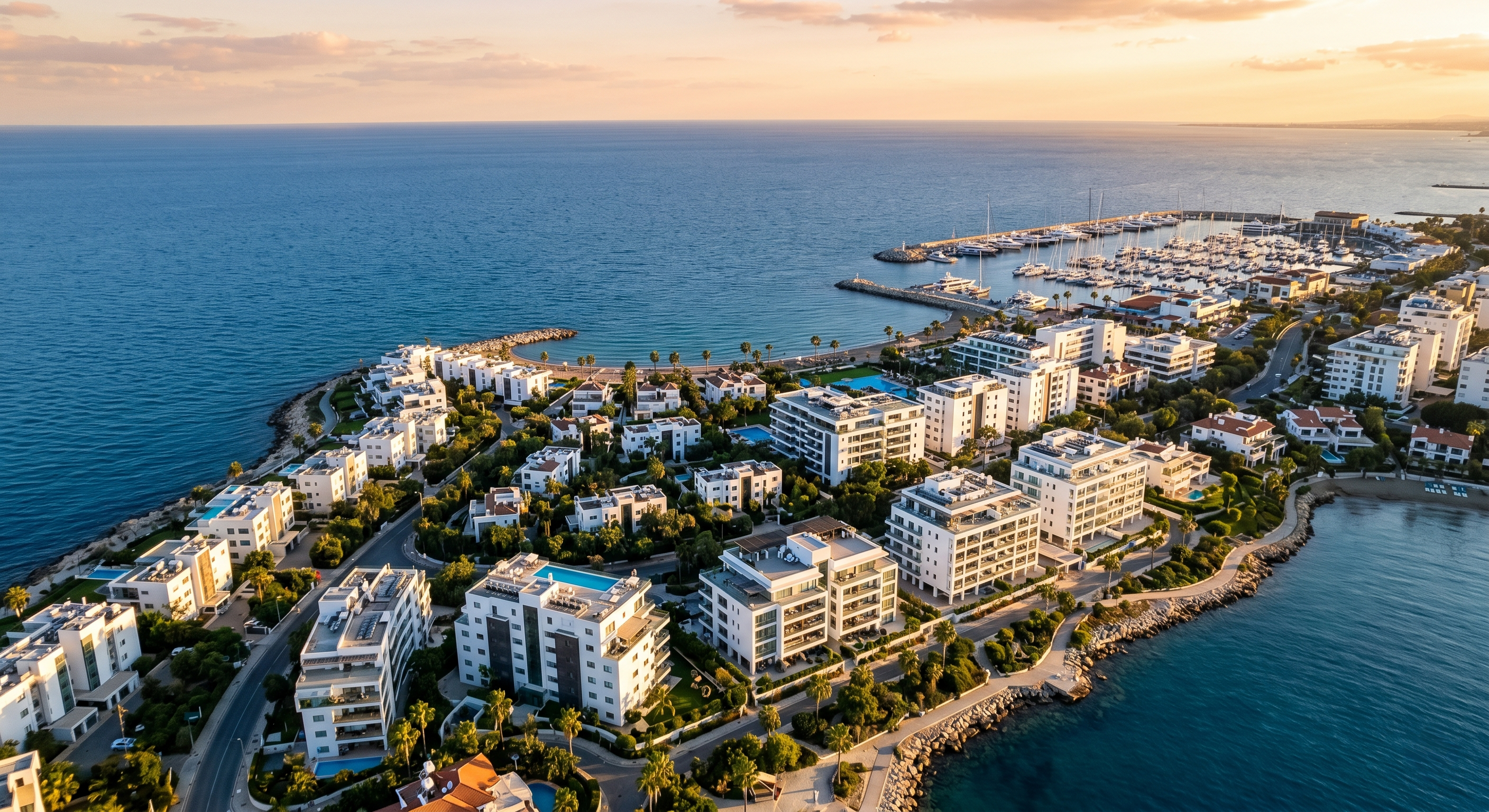
Cyprus delivers average gross rental yields of 5.45% for apartments across the island one of the highest in the EU Mediterranean. But the range between cities is wide and choosing the right area can mean the difference between a 4% yield and a 9% one. This guide breaks down what the numbers actually look like by city and neighbourhood, based on Q4 2025 RICS data and current market conditions.
Rental Yield by City: Quick Reference
City | Avg. Gross Yield (Apartments) | Best For |
|---|---|---|
Limassol | 5.5% to 7.5% | Long-term expat lets, premium short-term |
Paphos | 4% to 9% (short-term) | Holiday rentals, lifestyle buyers |
Larnaca | 4% to 7.4% | Value investment, growth potential |
Nicosia | 4.7% to 6% | Stable long-term lets, professionals |
Limassol: Highest Consistent Yields in Cyprus
Limassol is Cyprus's top-performing rental market. Average gross yields for residential apartments sit at 5.5% to 6%, with high-demand mid-market neighbourhoods like Mesa Geitonia and Neapolis reaching up to 7.5%. One-bedroom apartments near the Marina and Zakaki area consistently yield around 7.8% gross.
What drives this performance is demand, not speculation. Limassol hosts the largest concentration of international businesses, tech companies and financial services firms in Cyprus. Expat professionals, digital nomads and Golden Visa applicants maintain high occupancy rates of 92% to 95% in core districts, with vacancy windows typically under two to three weeks for well-priced units.
Rent per square metre in Limassol reaches around €30, compared to roughly €20 in Nicosia and €19 to €22 in Larnaca. Entry prices are the highest on the island, with median apartment prices around €670,000, which is the main constraint on yield compression at the lower end.
Best neighbourhoods for yield: Mesa Geitonia, Neapolis, Zakaki, Agios Tychonas (for luxury short-term).
Paphos: Best Short-Term Rental Yields on the Island
For short-term and holiday rental investors, Paphos outperforms everywhere else. Kato Paphos short-term yields frequently reach 9% net, driven by year-round tourism, direct international flights and a mature holiday rental infrastructure.
Paphos is the most popular destination for UK and Northern European buyers, which creates a self-sustaining demand cycle: buyers who use the property part of the year and rent it for the remainder can achieve strong blended returns even at moderate occupancy. Properties under €300,000 in well-positioned areas often qualify for fast rental returns and residency eligibility simultaneously.
Long-term yields sit lower at around 4% on average, reflecting the lifestyle-first buyer profile and higher villa stock relative to apartments. The play in Paphos is short-term rental management or a hybrid personal-use and rental model.
Best neighbourhoods for yield: Kato Paphos, Universal, Peyia (for short-term and holiday lets).
Larnaca: The Growth Story of 2026
Larnaca is the fastest-growing market in Cyprus right now. The €1.2 billion Marina and Port redevelopment is in its second phase in 2026 and areas like Mackenzie and Drosia are seeing price growth of 6% to 8% annually nearly double the national average.
Current yields sit at 4% on the RICS average, but targeted investment in high-demand zones delivers 6.7% to 7.4%. Entry prices are significantly lower than Limassol: price per square metre runs at €2,100 to €2,400 for apartments, compared to €3,200 to €3,500 in Limassol. That gap is closing, which means investors entering now are buying both yield and capital growth.
For buyers looking at Cyprus property investment with a lower barrier to entry than Limassol, Larnaca currently offers the best balance of risk and return.
Best neighbourhoods for yield: Mackenzie, Drosia, areas adjacent to the new Marina development.
Nicosia: Stable, Low-Volatility Returns
Nicosia is a different investment thesis from the coastal cities. There is no tourism component, which means yields do not spike in summer or drop in winter. The capital's rental market is driven by professionals, civil servants and university students a demand base that is consistent and relatively price-insensitive.
Average gross yields sit at 4.7% to 6%, with the strongest returns in the administrative core near government buildings, where five-year commercial and residential leases are standard. Strovolos district is identified as a currently undervalued area with solid yields, business district proximity and prices well below coastal cities.
Median apartment prices in Nicosia average €353,500 the most affordable major city in Cyprus which keeps gross yields respectable even at lower absolute rents.
Best neighbourhoods for yield: Administrative core, Strovolos (for value-oriented investors).
Long-Term vs Short-Term Rental: Which Yields More?
The answer depends on management capacity.
Long-term rentals in Cyprus offer yields of 4% to 7.5% gross depending on location, with low management overhead, stable income and predictable occupancy. Short-term holiday lets in high-demand coastal areas particularly Paphos and Limassol Marina can yield 8% to 10% or higher, but require professional management, seasonal pricing strategy and higher operating costs.
Professional property management is estimated to add 2% to 4% over unmanaged short-term lets through optimised pricing and multi-channel marketing. For investors without local presence, factoring in 15% to 20% management fees is essential to model net yields accurately.
What Affects Net Rental Yield in Cyprus
Gross yield figures are a starting point. Net yield is what matters for actual return planning.
Cyprus landlords pay no annual national property tax it was abolished in 2017. Annual municipal charges run from €200 to €600 for apartments and higher for houses. Rental income is subject to income tax in Cyprus, with the Non-Dom regime offering significant relief for qualifying foreign residents. Property insurance costs typically range from €200 to €600 per year for apartments.
For properties under management for short-term lets, maintenance, cleaning and platform fees can absorb 25% to 35% of gross rental income in the high season. Modelling net yield at 70% to 75% of gross is a reasonable starting assumption before detailed cost analysis.
Rental Yield Outlook for 2026
Cyprus rent growth is projected at 3% to 6% for 2026, with Limassol at the top end and Larnaca more moderate. Demand from expats, relocating professionals and international students is expected to remain strong across all major cities, keeping vacancy rates low.
The most important structural factor supporting yields is supply constraint. Permitting timelines and construction costs are limiting new supply across Limassol and Paphos, which keeps upward pressure on rents even as property prices stabilise following years of strong growth.
For investors comparing Cyprus to other EU Mediterranean markets, the combination of no annual property tax, Non-Dom tax advantages and yields consistently above 5% in well-chosen locations makes the numbers difficult to replicate elsewhere in the EU.
Finding Properties by Rental Yield Potential
At FindWelle, you can search Cyprus property using plain language descriptions including investment-focused queries like "2-bedroom apartment in Limassol with good rental potential" or "studio near Larnaca marina for short-term letting." The platform searches across developers and agencies to return listings that match your investment criteria, not just your filter settings.
Visit: FindWelle
Data sources: RICS Property Price Index Q4 2025, Central Bank of Cyprus Residential Property Price Index, Investropa market data 2026. This article is for informational purposes and does not constitute financial or investment advice.